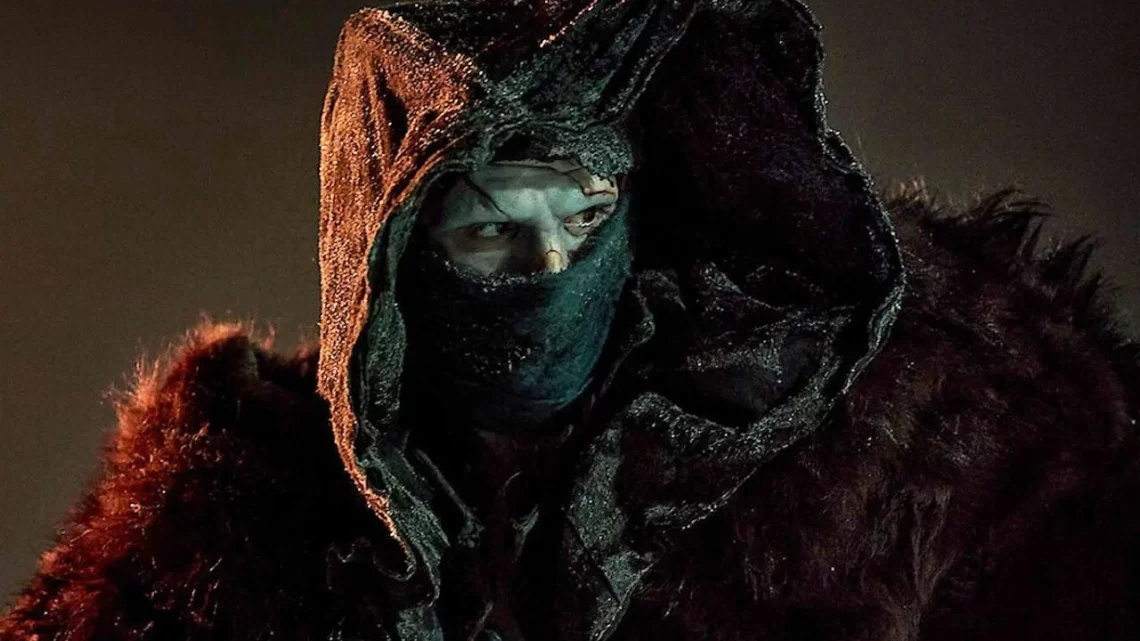
Beauty That Devours Its Own Soul
Can a monster be beautiful if his loneliness is so devastating it pierces through the screen? Is it possible for a film’s visual perfection to become its own curse? Guillermo del Toro doesn’t reinvent the Frankenstein myth—he dresses it in Gothic velvet, bathes it in a sumptuous color palette, and gifts Jacob Elordi the chance to break hearts from beneath prosthetic deformity.
The story is the same one Mary Shelley wrote in 1818, the one cinema has revisited dozens of times without managing to surpass: Victor Frankenstein, played by Oscar Isaac, is a doctor obsessed with conquering death who stitches together corpse limbs to form a creature brought to life with electricity, awakening to a world that will brutally reject him for his appearance. Del Toro knows this territory by heart—his monsters have always been more human than the humans who hunt them—and here he unleashes his entire visual arsenal without restraint. The sets resemble decomposing cathedrals, the costumes exude decadent opulence, and the practical effects promise to age with the dignity of “The Lord of the Rings” rather than the digital shame of “The Hobbit.” This is a film meticulously designed to earn an Oscar nomination for production design, and it probably will, because every frame functions as a painting that could hang in a museum dedicated to dark romanticism.
But Del Toro’s visual beauty conceals the same recurring problem in almost his entire filmography, with the honorable exception of “Pan’s Labyrinth”: the aesthetic mercilessly devours the narrative. This Frankenstein contributes absolutely nothing new to the already exhausted myth. The creature’s pathos, society’s incomprehension, the creator’s God complex, the North Pole prologue—all of it was already in Kenneth Branagh’s 1994 version with Robert De Niro as the monster, which delved far deeper into Dr. Frankenstein’s tragedy. Here, Isaac’s character is reduced to a mad doctor with daddy issues: he despises his creation because his father despised him first. Simple, hackneyed, narratively insufficient. The voice-over constantly over-explains what Mary Shelley made perfectly clear over two centuries ago: the real monster is the creator, not the creature. There was no need to repeat it every fifteen minutes as if audiences were incapable of grasping the most obvious metaphor in Gothic literature.
What does work, with genuinely moving force, is Jacob Elordi giving voice and body to the creature. The young Australian actor embodies the monster’s existential loneliness with a vulnerability that pierces through the prosthetics and elaborate makeup. He’s the only genuinely romantic element of this reading of the myth: his tragic beauty resides in his devastating inability to be loved despite possessing more humanity than those who reject him by instinct. Del Toro returns to themes that obsessively run through his entire body of work, from “The Shape of Water” to “Pinocchio” and “Nightmare Alley”: the outsider desperately seeking belonging, society as the true monstrous threat, love as the only possible redemption in a cruel world.
The fundamental problem is that we’ve seen it so many times—both in his own filmography and in previous adaptations of this same story—that it becomes difficult to emotionally engage with characters whose fate we know from the first frame.
Frankenstein is an impeccable visual feast that only partially compensates for a predictable script and underdeveloped characters. If you’re looking to enjoy cinema as pure aesthetic spectacle, Del Toro gives you two hours of impeccable cinematic design. If you’re seeking a deep and original revision of the myth of creation and moral responsibility, better return to Shelley’s original novel or revisit Branagh’s underrated version. “Frankenstein” is essential viewing if you value visual craftsmanship above narrative depth, and if you accept that sometimes beauty can be its own gilded cage.