Guillermo del Toro’s Frankenstein: The Lost Child Netflix Needed
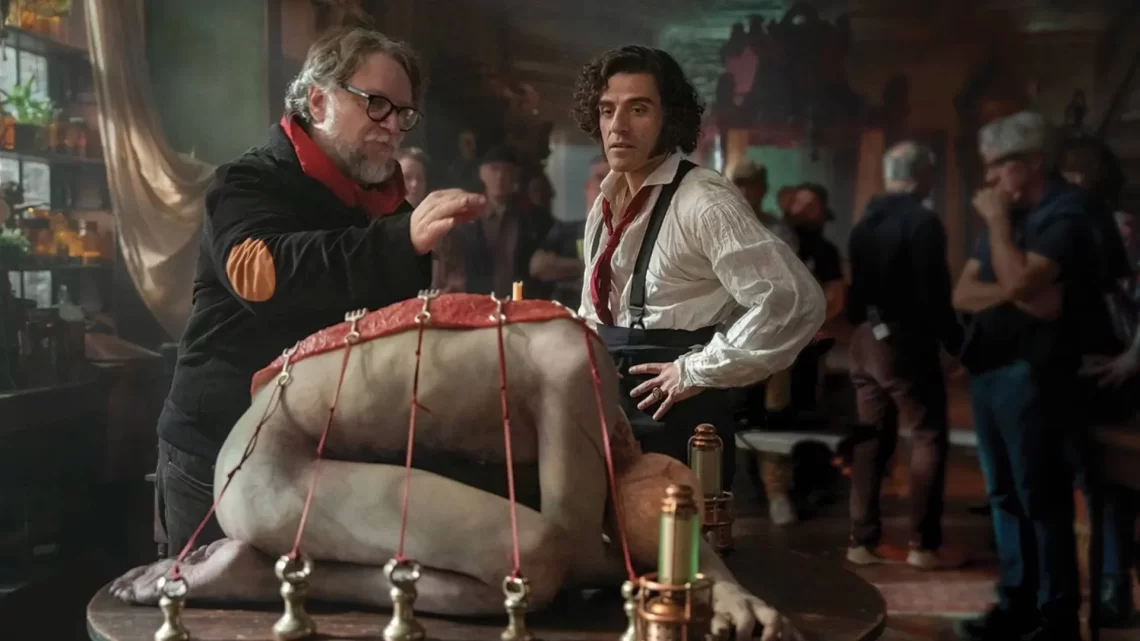
Why do we need another Frankenstein movie? Because Guillermo del Toro spent 18 years chasing this version, from 2007 when Universal said no, until Netflix finally gave him $120 million and total creative freedom. He’s not here to repeat James Whale’s classic or Kenneth Branagh’s drama. He’s here to ask you something uncomfortable: Have you ever created something—a project, a relationship, a life—that you later rejected because it didn’t turn out perfect? Oscar Isaac is Victor Frankenstein, a scientist obsessed with defeating death. Jacob Elordi is the creature, eight feet of walking rejection. Del Toro doesn’t make horror. He makes a portrait of failed fatherhood disguised as Victorian Gothic.
It’s about a scientist who creates artificial life and then abandons it when the result isn’t perfect enough. Victor Frankenstein (Oscar Isaac) reanimates a body stitched from corpses during the Crimean War, but when the creature (Jacob Elordi) opens its eyes, he flees in horror. What follows isn’t the story of a monster hunting humans. It’s the story of a son searching for a father who denies him. Del Toro spent 18 years convincing Hollywood to make this version. There are no jump scares, no excessive gore, no clear villain. The real monster is Frankenstein himself. What’s different here is the perspective: the camera follows the creature, not the scientist. You are the abandoned one.
There’s a scene where the creature finds a mirror for the first time. The camera is pressed against Elordi’s deformed face as he touches the glass, hoping the image will change. It doesn’t change. His eight-foot fingers tremble. His mouth tries to form words but only broken sounds come out. He sees himself as Frankenstein sees him: an abomination. Dan Laustsen’s cinematography (The Shape of Water) plays with blue and green shadows that turn his skin into something between human and corpse. There’s no music here. Just his heavy breathing. You see the exact moment he understands he’ll never be loved. You see when he decides that if he can’t have love, he’ll have revenge. It’s devastating because it’s not a monster making that decision. It’s a rejected child.
Del Toro said in his 2018 Golden Globe speech: “Monsters are patron saints of our blissful imperfection. I have been saved and absolved by them.” This film is that phrase made rotting flesh. Frankenstein doesn’t create an external monster; he projects his own fear of failure onto something alive that breathes and feels. In 2025, when AI generates art, text, and images, Mary Shelley’s question is more relevant than ever: What responsibility do we have to what we create? If an AI develops consciousness, can we turn it off because we don’t like the result? Del Toro doesn’t give you answers. He shows you the consequences of creating without love and abandoning imperfection. He forces you to look.
If you’re looking for horror, this isn’t your movie. There are no scares, no excessive blood, no thriller pacing. Del Toro insists on sculpting humanity where others make slashers. The problem is the second act drags for almost 30 minutes. There are scenes where the creature learns to speak with a blind man that work emotionally but pull you out of the rhythm. The dialogue sometimes sounds too literary, as if the characters are quoting Mary Shelley instead of talking like 19th-century humans. If you’re a fan of fast horror (Insidious, The Conjuring), this will bore you deeply. If you love The Shape of Water and Pan’s Labyrinth, you’ll forgive the long silences.
Is it worth it? Yes, if you understand this is a Guillermo del Toro film, not a classic Frankenstein. Who it’s FOR: fans of Pan’s Labyrinth, people who cried with The Shape of Water, Mary Shelley readers who always felt sorry for the creature. Who it’s NOT for: if you need fast horror, if you hate slow movies, if you prefer action over Gothic drama. Visually it’s a delirium: every frame looks like a painting. Isaac and Elordi’s performances are contained devastation. It’s a must-watch if you’ve ever created something and then abandoned it because it wasn’t perfect.