
OPERATION FORTUNE
When was the last time you watched a spy movie where the lead wasn’t haunted by family trauma or existential crises?
Where did those thrillers go—the ones that invited you to sit back, switch off your analytical brain, and simply enjoy the show without apologizing for being pure entertainment? Guy Ritchie, the British maestro behind ‘Snatch’ and ‘The Gentlemen’, returns to his absolute comfort zone with ‘Operation Fortune: Ruse de Guerre’, an unapologetic love letter to classic espionage cinema that the industry seems to have buried under layers of “emotional realism.” With Jason Statham leading a team that includes Aubrey Plaza, Josh Hartnett, and a deliciously villainous Hugh Grant, Ritchie builds an entertainment machine that works precisely because it doesn’t pretend to be anything more: sophisticated fun with zero hidden agenda.
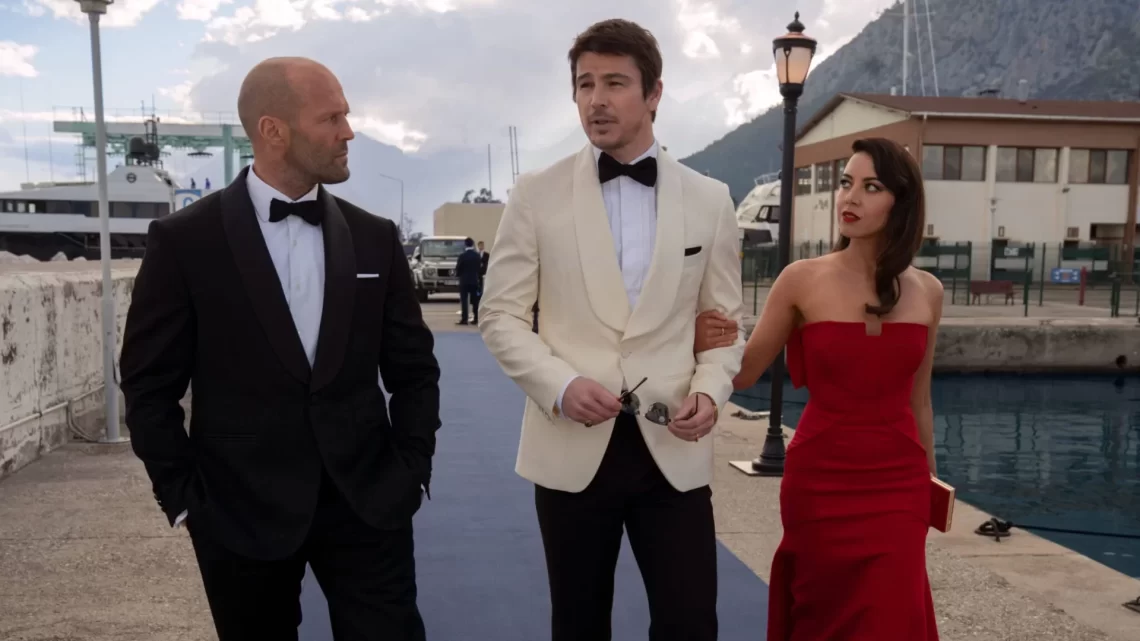
Orson Fortune, MI6 special agent with a weakness for expensive wines and impeccable suits, must recover lethal technology dubbed “The Handle” before it falls into the wrong hands. To infiltrate billionaire Greg Simmonds’ inner circle (Hugh Grant deploying his British charm with psychopathic undertones), Fortune recruits Danny Francesco (Josh Hartnett), a Hollywood star whose vanity turns out to be the perfect distraction tool. What follows is a tour through international sets—Turkey, Qatar, European mansions—where the team navigates betrayals, choreographed shootouts, and dialogue constantly crossing between clever and absurd. Ritchie embraces every genre convention like a chef who knows his recipe by heart: the deliberately vague MacGuffin, the villain so charismatic you almost root for him, twists you see coming but enjoy anyway, and that accelerated editing—courtesy of regular editor Eddie Hamilton—that makes even planning scenes feel like pure action sequences.
Technically, this is Ritchie on luxury autopilot. Alan Stewart’s cinematography captures that visual aspirationalism defining the genre: yachts, casinos, hotel suites resembling art galleries. Christopher Benstead delivers a score that shamelessly embraces ’80s synthesizers and dramatic strings, reminding us this genre always had one foot in self-aware camp. Hugh Grant is the absolute MVP: at 60, he’s discovered that playing charming villains beats romantic lead work any day, and his chemistry with Statham’s refined-brute generates the film’s best moments. Here’s the stumble, though: Aubrey Plaza, an actress whose lethal sarcasm could’ve detonated every scene, gets relegated to competent decoration. Ivan Atkinson and Marn Davies’ script occasionally tries too hard to sound witty, resulting in dialogue that feels more comedy sketch than organic professional banter. It’s the price of prioritizing pace over depth, speed over nuance.
Operation Fortune reinvents nothing and makes no apologies. In an era where even superhero movies demand intergenerational trauma, Ritchie delivers something increasingly rare: pure entertainment that respects your intelligence without overloading it with moral subplots. It’s for those who miss when action films didn’t need to justify their existence with “important themes,” when a good villain, charismatic hero, and well-shot chases were contract enough with audiences. If your definition of a good night includes watching Jason Statham break jaws in Armani suits while Hugh Grant manipulates billionaires with champagne and predatory smiles, this is your film. Or have we forgotten that cinema can also simply entertain us without asking permission?


