

The Book That Wrote the Pandemic Before It Existed
The Ones Who See
There was a moment in 2020 when I walked out wearing a mask for the first time and didn’t recognize anyone. Not because I didn’t know them. But because without seeing faces, we were all the same body with the same fear. The man from the corner store, the neighbor from the third floor, the kid who always said hello — reduced to eyes and foreheads. I was that to them too. And in that moment I understood something a Portuguese writer had understood twenty-five years earlier: that blindness doesn’t need darkness. That the worst blindness is white.
José Saramago published Blindness in 1995. The story opens with a man who goes blind at the wheel of his car, at a green light, without warning. There’s no darkness. There’s white light — total, overwhelming, like the world has been filled with milk. Within hours the blindness spreads. The government does the only thing governments know how to do when they don’t understand something: they lock the infected away. They send them to an abandoned asylum. They leave them there. And then they forget about them.
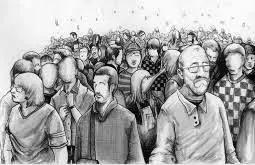
What happens inside that asylum is what Saramago really came to tell. No names — no character has one, only descriptions: the doctor, the doctor’s wife, the girl with dark glasses, the old man with the black eyepatch. Without identity, people stop being people and start being instinct. An armed group seizes control of the food supply. First they demand valuables. Then they demand women. They do it because they can, because no one sees, because without witnesses there is no shame and no consequence. There’s a scene where the blood of someone just killed mixes on the floor with spilled milk. Saramago doesn’t describe it as tragedy. He describes it as mess that needs cleaning up. That’s the blow: how quickly horror becomes routine.
One person keeps her sight: the doctor’s wife. No one knows why. Neither does she. What she understands is that she can’t say so, because lucidity in a world of the blind is more dangerous than blindness. She has to pretend she can’t see in order to survive among those who can’t. She has to carry alone the weight of seeing everything others cannot. It’s a burden Saramago doesn’t romanticize. There’s no heroism. Just a woman who sees things she would rather not have to see, and who keeps her eyes open anyway.
Saramago won the Nobel Prize in Literature in 1998, three years after publishing this book. When the pandemic arrived in 2020, Blindness returned to bestseller lists worldwide. People searched for it as if it were a survival manual for civilizational collapse. What they found wasn’t a manual. It was a mirror. Saramago hadn’t imagined any catastrophe. He had seen something that already existed — the fragility of order, the speed at which civilization disappears when the gaze of the other disappears — and had written it down before we had any excuse left to deny it.
The question the book leaves isn’t whether something like this can happen. It already did. The question is what you were seeing when you chose not to look.


