The Weight of Outliving Your Own Life
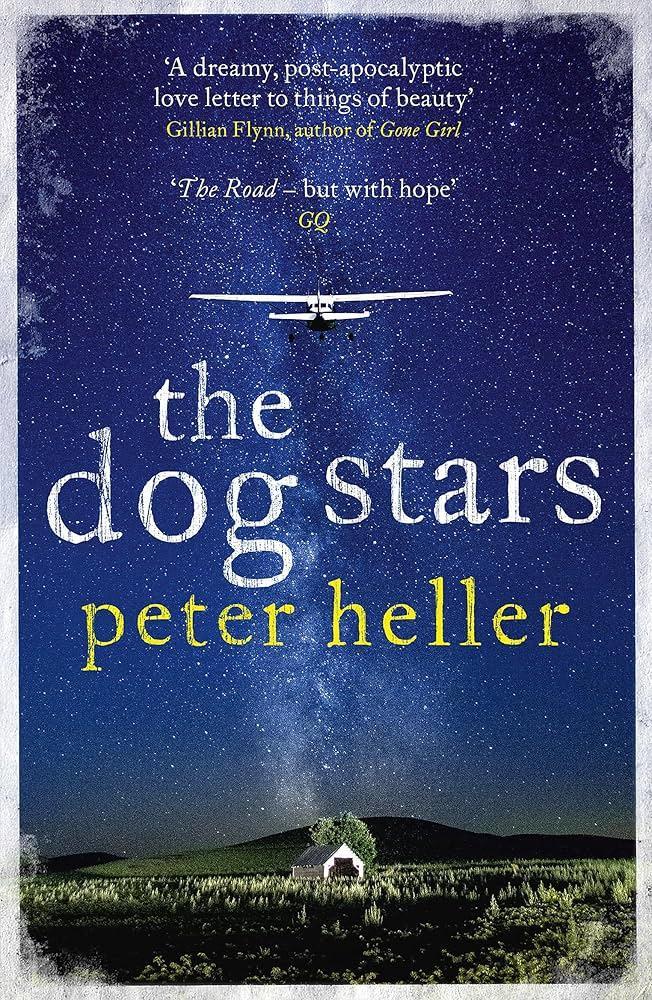
Inspired by the mark left by Peter Heller’s The Dog Stars, this is a conversation about everything that disappears — and everything that somehow sticks around — once everything we thought mattered is suddenly gone.
Sometimes the most reckless thing you can do isn’t giving up — it’s daring to want something new after the world has already ended.
Meet Hig.
The man lives dug into the cracked tarmac of an old airfield. His only contact with another living soul is a paranoid neighbor who sleeps with a rifle in his arms and fires at anything that crosses the horizon. His only family is an aging dog. Every day, almost like a ritual, Hig climbs into a beat-up old Cessna, fires up the engine, circles a landscape gutted by a global pandemic, and lands again on that same cracked runway. He isn’t looking for anyone. He isn’t waiting on anyone either. He’s just watching the emptiness. He’s lost his wife, his friends, and the world exactly as he once knew it.
And watching that loop play out, day after day, it gets impossible to keep thinking of this as some distant apocalypse. It starts being about us.
The Lie of Our Own Imaginary Cessna
Just look at how many times we’ve climbed into our own imaginary Cessna. That momentum of getting up, going to work, paying the bills, smiling through meetings, and going back to sleep. We circle a life that, deep down, we already know has gone dark. We do exactly what it takes not to crash. We guard our perimeter. But we never actually get anywhere.
That’s where the real tragedy lives. The crack isn’t imminent death or a shortage of food — it’s existential loneliness wearing the costume of routine. It’s the quiet, macabre con of mistaking survival for a life.
Hig is breathing, sure. His heart still pumps blood. He knows how to fish, how to shoot. But there’s an invisible, lethal villain bunking with him in that hangar: memory. The weight of his dead wife’s memory is so heavy he invents her an entire constellation in the sky, just to give his grief somewhere to hang. The past punishes harder than hunger ever could.
And that’s a deeply human condition. Sometimes memory turns into a maximum-security prison. We hold on to the ghost of who we used to be because facing who we are now is terrifying.
Dug In Against the Fear of Hope
Hig’s neighbor, Bangley, is the perfect stand-in for that inner voice all of us carry once we’re broken — the one that says don’t leave the safe zone, everything out there will hurt you. And we listen. We dig in.
We stay in the job that’s draining us dry, the relationship that lost its pulse years ago, the city that’s slowly suffocating us — because we believe that if we never move, nothing can break us again. Surviving the routine turns into something cold and mechanical, a biological act with no soul left in it.
But there’s always a tipping point — some hairline crack in reality — where simply surviving stops being enough. Where the body and the mind start demanding more than just breathing.
The real danger here was never the armed scavengers. It’s the stupid, ridiculous, achingly beautiful idea that maybe, somewhere past the radar, something different is waiting. It’s the fear of hope itself.
Because hope is terrifying. Let yourself want something from life again, and you risk life knocking you down all over again. Once everything’s already been taken from you, guarding your own wreckage becomes the closest thing you have to a religion. Daring to start the engine and fly straight into the unknown — knowing there might not be enough fuel to make it back — is the biggest act of rebellion a broken spirit has left in it.
So is it worth it? This isn’t a book for readers chasing a fast-paced thriller with a tidy ending — skip it if that’s what you’re after. But if you’ve ever caught yourself defending a routine that stopped meaning anything, dug into your own emotional airfield, this novel is going to hurt in exactly the right place. Peter Heller doesn’t hand out cheap comfort or a neat resolution; he hands you an uncomfortable, necessary mirror.
It’s a book you must read if you’ve ever mistaken simply not being dead for actually being alive.